
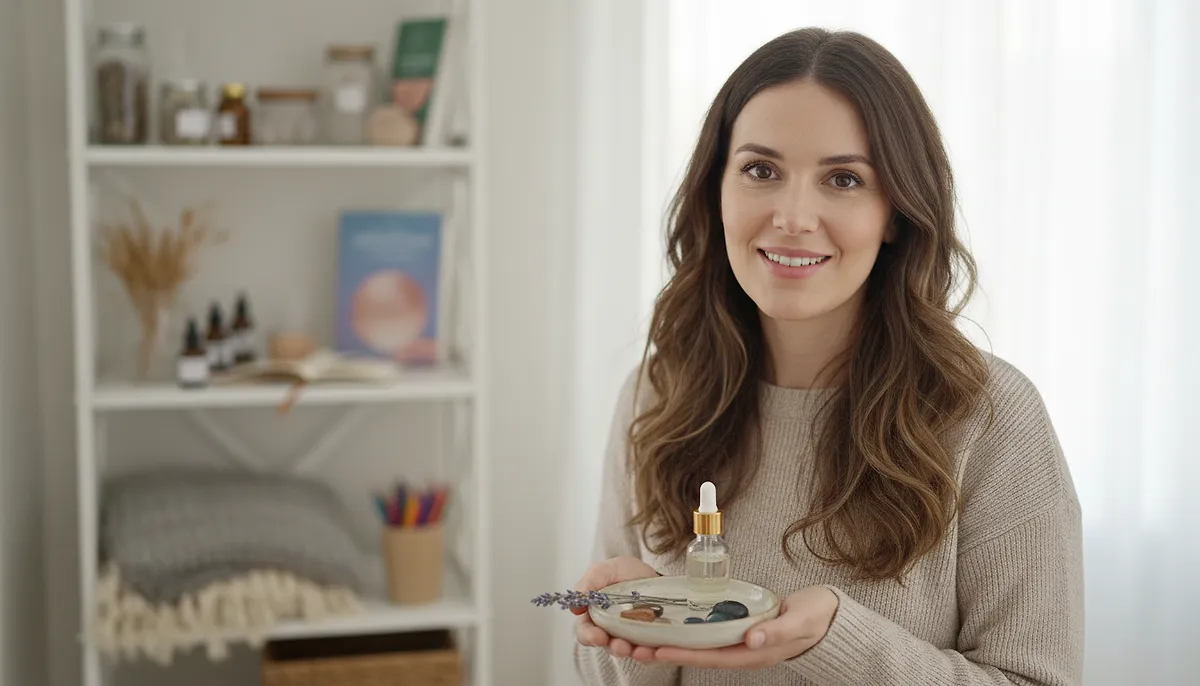
How to Build Your Own Self-Care Toolkit for Hard Days
There are days when the world feels like it’s spinning just a little too fast. The to-do list is a mile long, the news is heavy, and your own inner critic is being particularly loud. I remember those days all too well from my life in the city—days when my shoulders lived permanently up by my ears and a deep breath felt like a luxury I couldn’t afford. On those days, I wished for a magic button, something I could press to instantly feel a sense of calm and safety.
While there’s no magic button, I’ve discovered something that comes beautifully close: a personal self-care toolkit. It’s my emotional first-aid kit, a tangible collection of comfort that I can turn to when I feel frayed, overwhelmed, or just plain sad. It’s one of the most compassionate things I’ve ever done for myself.
In this article, I want to guide you through the beautiful and deeply personal process of creating your very own toolkit. We’ll explore simple, accessible items that engage all five senses, helping to ground you in the present moment when your mind wants to race ahead or spiral into worry. This isn’t about buying fancy gadgets; it’s about curating a collection of your own personal peace.
So, What Exactly Is a Self-Care Toolkit?
Think of it as a physical box, bag, or even a designated drawer filled with items that soothe your nervous system and bring you back to yourself. It’s your go-to resource for hard moments—an emergency calm kit for when you feel the first signs of stress, anxiety, or burnout. The goal is to have these tools readily available so you don’t have to think, “What will make me feel better?” when you’re already feeling depleted. You can just reach for your kit.
The beauty of this practice is its personalization. My toolkit will look different from yours, and that’s exactly how it should be. It’s a reflection of what brings you comfort, joy, and a sense of safety.
My “Why”: A Little Story About Burnout
Years ago, before I traded my city apartment for a life with more intention and green space, I hit a wall. I was working a demanding job, fueled by caffeine and a misguided sense of hustle. I remember one particular Tuesday—the kind where everything goes wrong. A missed deadline, a difficult client call, and a forgotten umbrella in a downpour left me standing on my doorstep, fumbling for my keys, and feeling the hot sting of tears. I felt utterly defeated.
That evening, without calling it “self-care,” I instinctively created my first toolkit. I changed into my softest sweatpants, brewed a pot of strong peppermint tea, and wrapped myself in the one ridiculously plush blanket I owned. I put on a quiet, instrumental album and just sat in the dim light, letting the warmth of the mug seep into my hands. In that moment, I wasn’t Elara Finch, the aspiring professional; I was just a person in desperate need of gentleness. Those simple things—the soft texture, the warm tea, the calming music—were a lifeline. They didn’t solve my problems, but they calmed the storm inside me enough to breathe again.
Your self-care toolkit isn’t meant to fix your problems. It’s meant to hold you and support you while you navigate them.
Building Your Toolkit: A Journey Through the Senses
The most effective way to build your toolkit is to think about your five senses. When we’re stressed or anxious, our minds tend to be stuck in the past (rumination) or the future (worry). Engaging our senses is a powerful mindfulness technique that anchors us firmly in the present moment. It sends a signal to our nervous system that says, “Right here, right now, you are safe.”
For Your Sense of Touch
Touch is one of our most primal and comforting senses. Think about textures, temperatures, and gentle pressure.
- Something Soft: A small, incredibly soft blanket, a cozy pair of socks or slippers, or even a piece of velvet or silk you can keep in the box.
- Something Weighted: A small weighted lap pad or a soft, heavy stuffed animal can provide calming deep pressure.
- Something Smooth: A polished “worry stone,” a smooth river rock, or a piece of sea glass to hold and rub between your fingers.
- Something Warm: A microwaveable heat pack filled with lavender or rice. The combination of warmth and weight is deeply soothing for tense shoulders.
- Something to Moisturize: A tube of thick, luxurious hand cream. The act of slowly massaging it into your hands is a mindful moment in itself.
For Your Sense of Smell
Scent is directly linked to the emotional centers of our brain. A calming aroma can shift our mood almost instantly.
- Essential Oil Roller: A pre-blended rollerball with calming oils like lavender, chamomile, bergamot, or frankincense. You can apply it to your wrists, temples, or just inhale it from the bottle.
- A Calming Sachet: A small cloth bag filled with dried lavender buds or rose petals. You can gently squeeze it to release the scent.
- Your Favorite Scent: A small vial of a perfume or a solid lotion that reminds you of a happy memory or a person you love.
- A Calming Mist: A small spray bottle with a facial or room mist. Look for scents like rosewater or clary sage.
For Your Sense of Taste
This is about mindful indulgence and nourishment. Choose things that feel both comforting and good for your body.
- Herbal Tea Bags: A curated selection of your favorites—chamomile for sleep, peppermint for focus, ginger for settling an upset stomach.
- High-Quality Dark Chocolate: A small bar of at least 70% cacao. Savor one square at a time, letting it melt slowly in your mouth.
- A Calming Snack: Some of my favorite calming snacks to keep at your desk for stressful days are perfect additions, like a small bag of almonds or walnuts. They provide a satisfying crunch and stable energy.
- A Soothing Lozenge: A honey or lemon lozenge can be surprisingly comforting, giving you something to focus on.
For Your Sense of Sight
What we see can either add to our stress or help to calm it. Your toolkit can offer a visual escape.
- A Meaningful Image: A photograph of a place you love (a quiet forest, a vast ocean), a beloved pet, or a happy memory with loved ones.
- Art or a Postcard: A small piece of art or a postcard with a beautiful design or an inspiring quote.
- A Coloring Book: A small, mandala-style coloring book and a few colored pencils. The repetitive motion and focus on color can be very meditative.
- An Eye Mask: Sometimes the best visual is no visual at all. A soft eye mask can block out overwhelming light and help you turn inward.
For Your Sense of Sound
Sound can either be jarring or incredibly healing. Curate a sonic sanctuary for yourself.
- A Calming Playlist: Create a playlist on your phone specifically for this purpose. It could be instrumental music, nature sounds (like rain or ocean waves), or gentle acoustic songs. Keep a pair of headphones in your kit.
- Guided Meditations: Bookmark a few of your favorite guided meditations. A guided Yoga Nidra session for deep, conscious rest can be incredibly powerful for resetting a frazzled nervous system.
- Silence: Don’t underestimate the power of quiet. A pair of noise-canceling headphones or simple earplugs can be a gift in a loud world.
Beyond the Senses: The “Mind” Component
While the sensory items are for grounding, the mind component is for processing and releasing. This is where you can gently untangle the knots of worry.
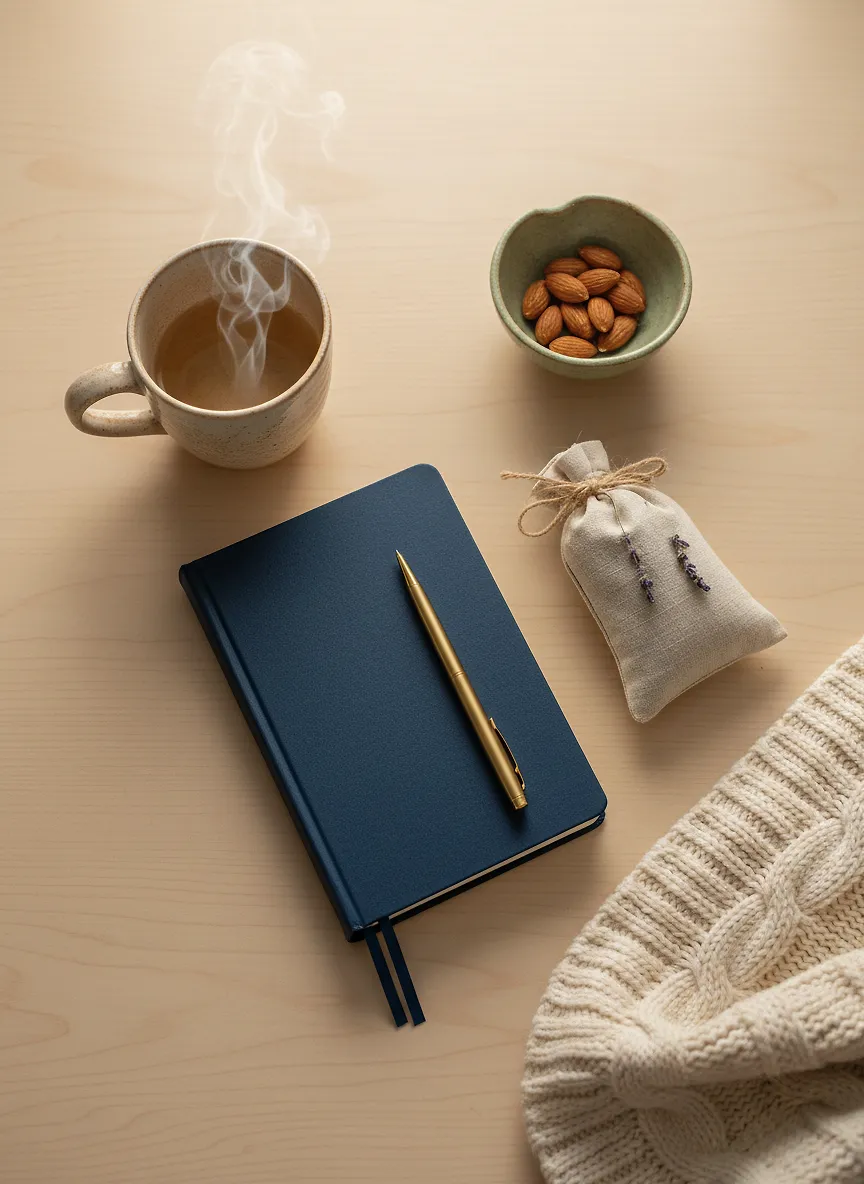
- A Journal and Pen: This is non-negotiable for me. A dedicated notebook for “brain dumping”—writing down everything that’s on your mind without judgment—can create so much space. If you find your thoughts spiraling, having a tangible next step can be a lifeline. I’ve written before about how to stop ruminating and gently quiet your mind, and a journal is a key tool in that practice.
- A List of Affirmations: Write down 3-5 short, comforting phrases on an index card. Things like, “This feeling is temporary,” “I am safe in this moment,” or “I can do hard things.”
- Breathing Prompts: Write down the simple instructions for a breathing exercise like Box Breathing (Inhale for 4, Hold for 4, Exhale for 4, Hold for 4) on a small card.
- A “Permission Slip”: Write yourself a permission slip to rest, to feel your feelings, or to say no. For example: “I give myself permission to do nothing for the next 20 minutes.”
Putting It All Together
Once you’ve gathered a few items, find a special container for them. It could be a beautiful wooden box, a simple shoebox you’ve decorated, a canvas tote bag, or a designated drawer in your nightstand. The act of creating a home for these tools is part of the ritual.
Keep it somewhere you can access it easily—not tucked away in the back of a closet. The goal is to make it effortless to reach for support when you need it most.
Remember, your toolkit is a living thing. You can add to it or swap items out as your needs change. The process of building and maintaining it is an ongoing act of love and attention for yourself. It’s a promise you make to your future self: when things get hard, I will be here to care for you.
I hope this guide inspires you to create a small sanctuary of calm for yourself. What’s one thing you’ll put in your toolkit first? I’d love to hear.
With calm and care,
Elara