

From Burnout to Bliss: How a Simple Bath Became My Sanctuary
I remember a time when my days were a frantic blur. Back in my city life, a shower was a purely functional, five-minute affair—a quick reset button I’d slam between a long workday and a commitment-packed evening. The idea of a bath felt like an impossible luxury, a relic from a slower, more romanticized era I simply didn’t have time for. The truth? I was running on empty, and my body and mind were screaming for a pause I refused to take.
It wasn’t until I intentionally stepped away from that life of chronic burnout that I rediscovered the profound, restorative power of water. A bath, I learned, isn’t just about getting clean. When approached with intention, it can be a deeply healing sensory ritual—a sacred space you carve out of your day to reconnect with yourself, soothe your nervous system, and melt away the accumulated stress that we all carry.
Today, I want to guide you through my personal process for transforming a simple bath into a DIY spa experience. This isn’t about adding more to your to-do list; it’s about creating a moment of intentional calm that nourishes you from the inside out. We’ll go beyond bubbles and explore how to engage all of your senses for ultimate relaxation.
More Than a Bath, It’s a Ritual
What’s the difference between just taking a bath and performing a bath ritual? The answer is simple: intention. A quick dip is passive; a ritual is an active practice of self-care. It’s the mindful decision to dedicate this time solely to your well-being. By setting an intention—perhaps it’s to release the day’s worries, to soothe tired muscles, or simply to enjoy a moment of peace—you elevate the act into something truly meaningful.
This is a beautiful, tangible way to engage in mindfulness. You’re not just going through the motions; you’re fully present. This simple act can be a beautiful entry point into a daily mindfulness practice, grounding you in your body and the present moment.
Step 1: Prepare Your Sanctuary
Your ritual begins before the water even starts running. The goal is to create an environment that signals to your brain, “It’s time to relax.” You want to remove any potential stressors or distractions so you can fully immerse yourself in the experience without interruption.
Declutter Your Space (and Your Mind)
A cluttered counter or a pile of laundry in the corner can be a subtle source of mental static. Take just two minutes to tidy up. Wipe down the surfaces, put away stray toiletries, and remove anything that feels out of place. Creating a visually calm space is the first step to cultivating internal calm.
Gather Your Tools
Think about everything you’ll need during and after your bath. Having it all within arm’s reach means you won’t have to jump out, dripping and cold, because you forgot something. This is about creating a seamless, uninterrupted flow.
- A large, fluffy towel and a cozy robe
- Your chosen bath salts, oils, or soaks
- A glass of water or a mug of herbal tea
- A washcloth
- A book or journal (if that feels relaxing to you)
- A body oil or lotion for after
Step 2: Engage All Five Senses
This is where the magic really happens. By intentionally engaging each of your senses, you create a holistic experience that pulls you out of your head and into your body. It’s a powerful way to quiet the mental chatter and anchor yourself in the present.
Scent: The Power of Aromatherapy
Our sense of smell is directly linked to the emotional centers of our brain. The right aroma can instantly shift our mood. I love creating my own blends, and I encourage you to experiment!
Bath Salts & Soaks:
- Epsom Salts (Magnesium Sulfate): My absolute non-negotiable. Magnesium is a miracle worker for relaxing sore muscles and easing tension. I use at least one full cup.
- Himalayan Pink Salt: Rich in minerals, it’s a beautiful and detoxifying addition.
- Oatmeal: If your skin is feeling dry or irritated, a colloidal oatmeal soak can be incredibly soothing.
- Lavender: The classic choice for calm and sleep.
- Roman Chamomile: Gentle, soothing, and wonderful for easing anxiety.
- Frankincense: Grounding and meditative, with a beautiful woody scent.
- Ylang Ylang: A sweet, floral scent that helps release tension and promote a sense of joy.
- Bergamot: It’s a citrus, but it’s known for its ability to reduce stress and elevate mood (just be sure to use a bergapten-free version to avoid sun sensitivity if you use it in other skincare).
- A playlist of instrumental music (classical, ambient, or lo-fi).
- Nature sounds, like gentle rain or ocean waves.
- A guided meditation or a Yoga Nidra track.
- Focus on your breath. Don’t try to change it, just notice it. Or, try a simple box breath: inhale for four counts, hold for four, exhale for four, and hold for four. This is a powerful tool for calming the nervous system.
- Let thoughts come and go. Your mind will wander to your to-do list or a conversation from earlier. It’s okay. Acknowledge the thought without judgment, and then gently guide your focus back to the sensation of the water or the scent of the oils.
- Practice gratitude. Think of three simple things you’re grateful for. The warmth of the water, the quiet of the house, the fact that you carved this time out for yourself.
Essential Oils for Relaxation:
A quick but crucial note: Never drop essential oils directly into the bathwater! They are not water-soluble and can sit on the surface, potentially causing skin irritation. Always mix them with your bath salts or a tablespoon of a carrier oil (like jojoba, sweet almond, or even olive oil) before adding them to the tub.
Sight: The Magic of Low Light
Harsh, overhead fluorescent lights are stimulating and jarring. Turn them off. The goal is to create a soft, warm glow that feels like a gentle hug for your eyes.
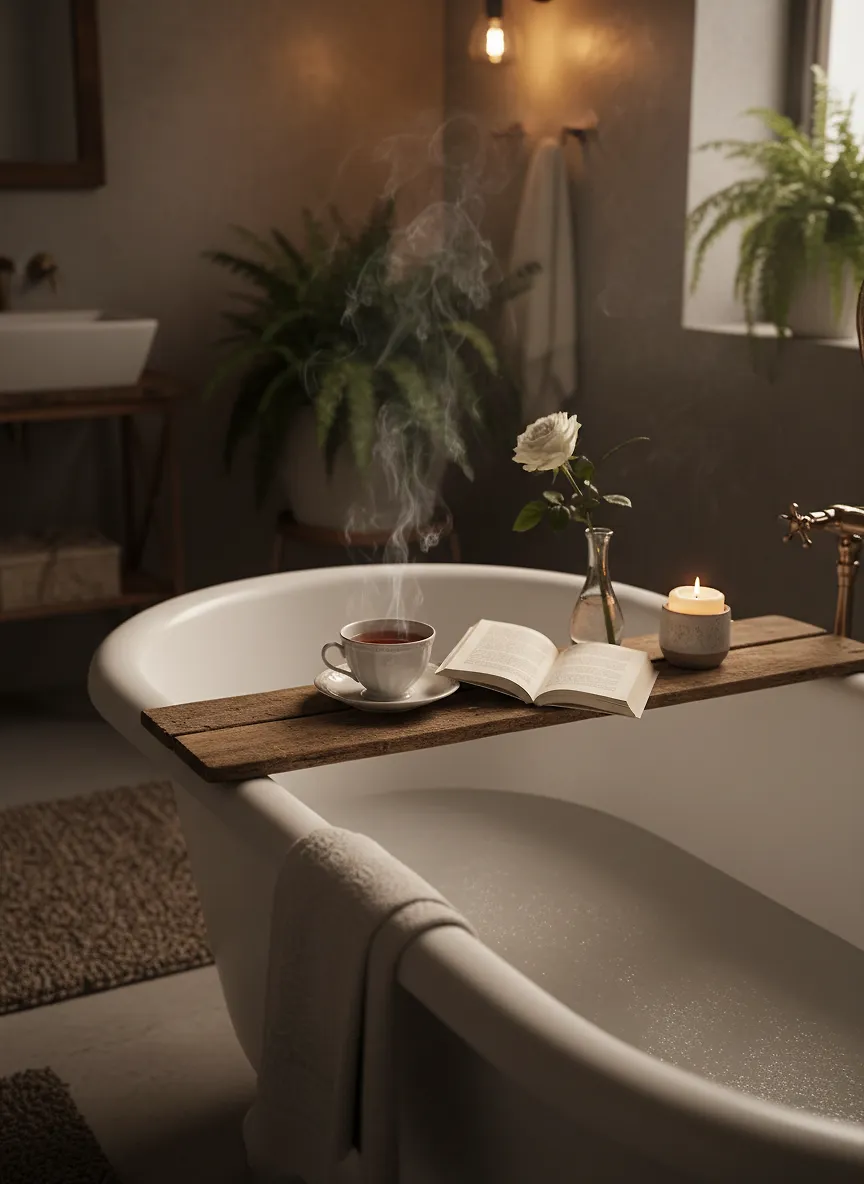
My go-to is always candles. The soft, flickering light is inherently calming. I opt for unscented beeswax or soy candles to avoid competing with my essential oils. A Himalayan salt lamp also casts a beautiful, warm pink hue that is incredibly peaceful.
Sound: Crafting Your Personal Symphony
What do you want to hear? Sometimes, the gentle sound of the water and blissful silence is all you need. Other times, a curated soundscape can deepen your relaxation. A few of my favorites:
Touch: The Sensation of Water and Warmth
This sense is a given, but we can enhance it with intention. Pay attention to the temperature of the water—it should be comfortably warm, not scalding. Notice the feeling of the water enveloping your body, supporting you. Feel the slight graininess of the salts as you step in. This is about tuning in to physical sensations. After your bath, wrap yourself in the softest towel and robe you own to prolong that feeling of comfort.
Taste: Simple, Nourishing Sips
While a glass of wine might seem like the classic bath-time pairing, I gently encourage you to try something more nurturing. Alcohol can disrupt sleep and is dehydrating. Instead, opt for a mug of calming herbal tea—like chamomile, lavender, or a sleepy-time blend. A beautiful glass of water infused with cucumber and mint is also wonderfully refreshing and hydrating.
Step 3: The Ritual Itself—Soaking with Intention
The scene is set. You’re in the warm, fragrant water. Now what? This is your time to simply be. For so many of us, this is the hardest part. We’re conditioned to always be doing something. I know for me, learning this was a huge part of my journey. It’s why I write so much about the art of doing nothing—it’s a skill we have to relearn.
Here are a few gentle suggestions:
Aim to soak for at least 15-20 minutes to allow your body to absorb the magnesium from the Epsom salts and for your nervous system to fully shift into a state of rest.
Step 4: Easing Out of the Experience
How you end the ritual is just as important as how you begin. Don’t shatter the peace by rushing into your next task. Move slowly and deliberately.
When you get out, pat your skin dry gently. While your skin is still damp, massage in a nourishing body oil or a thick, creamy lotion. This locks in moisture and the act of self-massage is another layer of care. As I, Elara Finch, have learned over the years, these small, mindful touches make all the difference.
Wrap yourself in your cozy robe, sip the rest of your tea, and transition into another quiet activity. This bath ritual can be a perfect part of a simple evening ritual to lower cortisol, setting you up for a night of deep, restorative sleep. Avoid screens or stimulating conversations. Perhaps read a few pages of a book, do some light journaling, or simply sit in quiet reflection.
My Go-To Calming Bath Recipe
Here is the simple, foolproof recipe I come back to again and again after a long or stressful day. It’s grounding, calming, and deeply restorative.
| Ingredient | Amount |
| Epsom Salts | 1 cup |
| Himalayan Pink Salt (fine grain) | 1/2 cup |
| Jojoba or Sweet Almond Oil | 1 tablespoon |
| Lavender Essential Oil | 6 drops |
| Frankincense Essential Oil | 4 drops |
Instructions: In a small bowl, combine the salts. Add the jojoba oil and essential oils to the salt mixture and stir well. This helps disperse the oils safely. Pour the entire mixture into your tub as the warm water is running, swishing it around to help it dissolve.
This ritual is your personal sanctuary. It’s a powerful declaration that you are worthy of rest, care, and moments of intentional calm. It doesn’t have to be a daily practice or a complicated production. Start where you are. Even a 15-minute soak with a cup of Epsom salts and the lights turned low is a beautiful gift to yourself.
I hope this guide inspires you to reclaim the bath as a tool for profound self-care. You deserve this peace.
With calm and care,
Elara